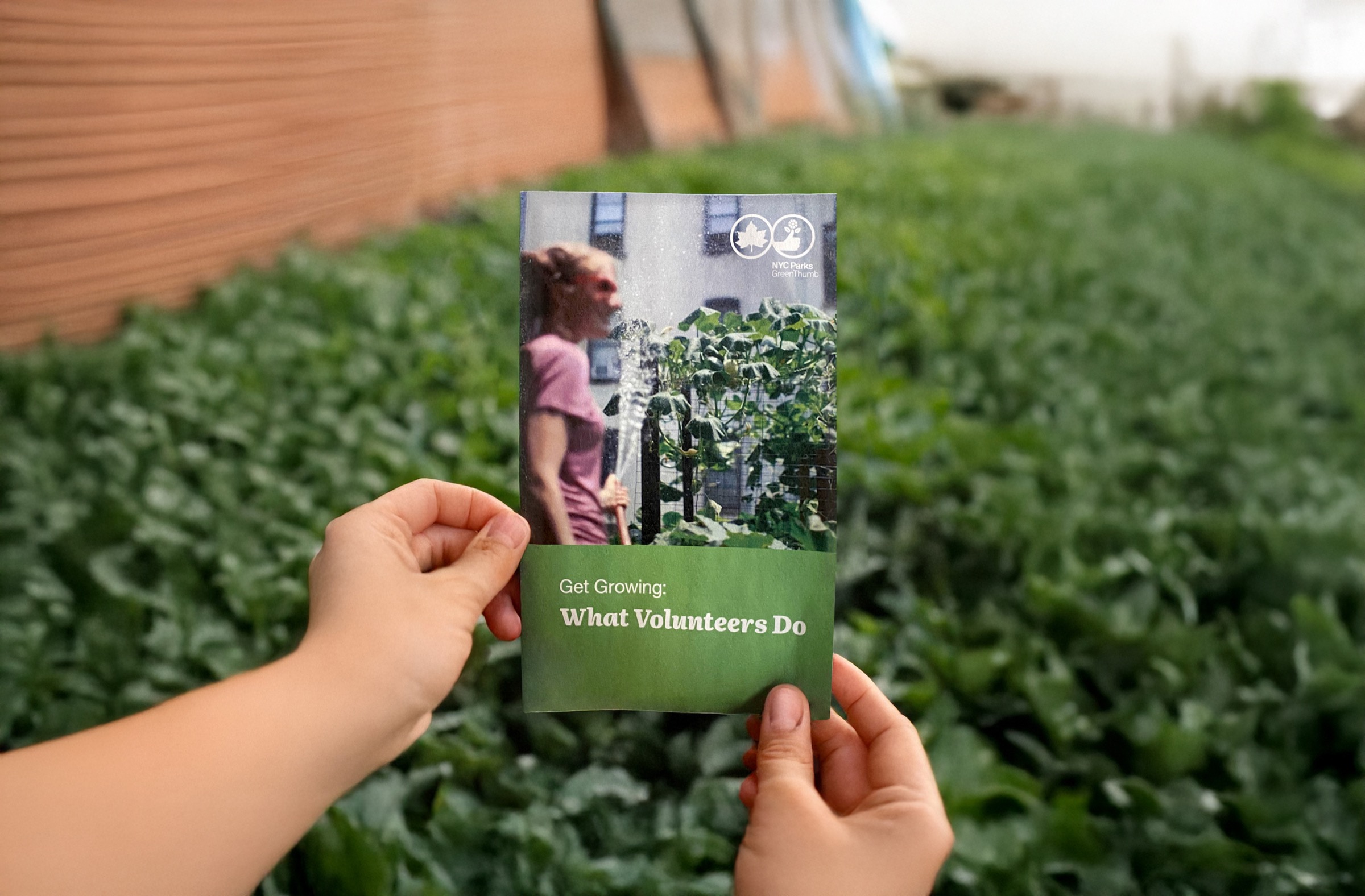
Redesigning the Volunteer Experience
Helping GreenThumb's community gardens grow their volunteer base
Rooted in Community
GreenThumb is the largest community gardening program in the country: 550+ gardens, 20,000 volunteers, all five boroughs. These spaces have their roots in the 1970s, when NYC neighborhoods ravaged by disinvestment and abandonment fought to reclaim vacant lots and turn them into something worth tending. Keeping that spirit alive today depends entirely on the people who show up. Gardens are entirely volunteer-led, and when leadership burns out or new volunteers don't find a way back in, gardens are at risk of closing.
That's what drew our team in. Not just a design problem, but a preservation problem.
Our team of three took that on as a service design challenge, sharing equal responsibility across research, synthesis, and design. I led the design and production of the final deliverable.
"Our challenge is to keep membership strong, bring in younger generations, and help gardens stay open as older gardeners age out."— Kyleen Sanchez, GreenThumb Volunteer Program Coordinator
Getting Close to the System
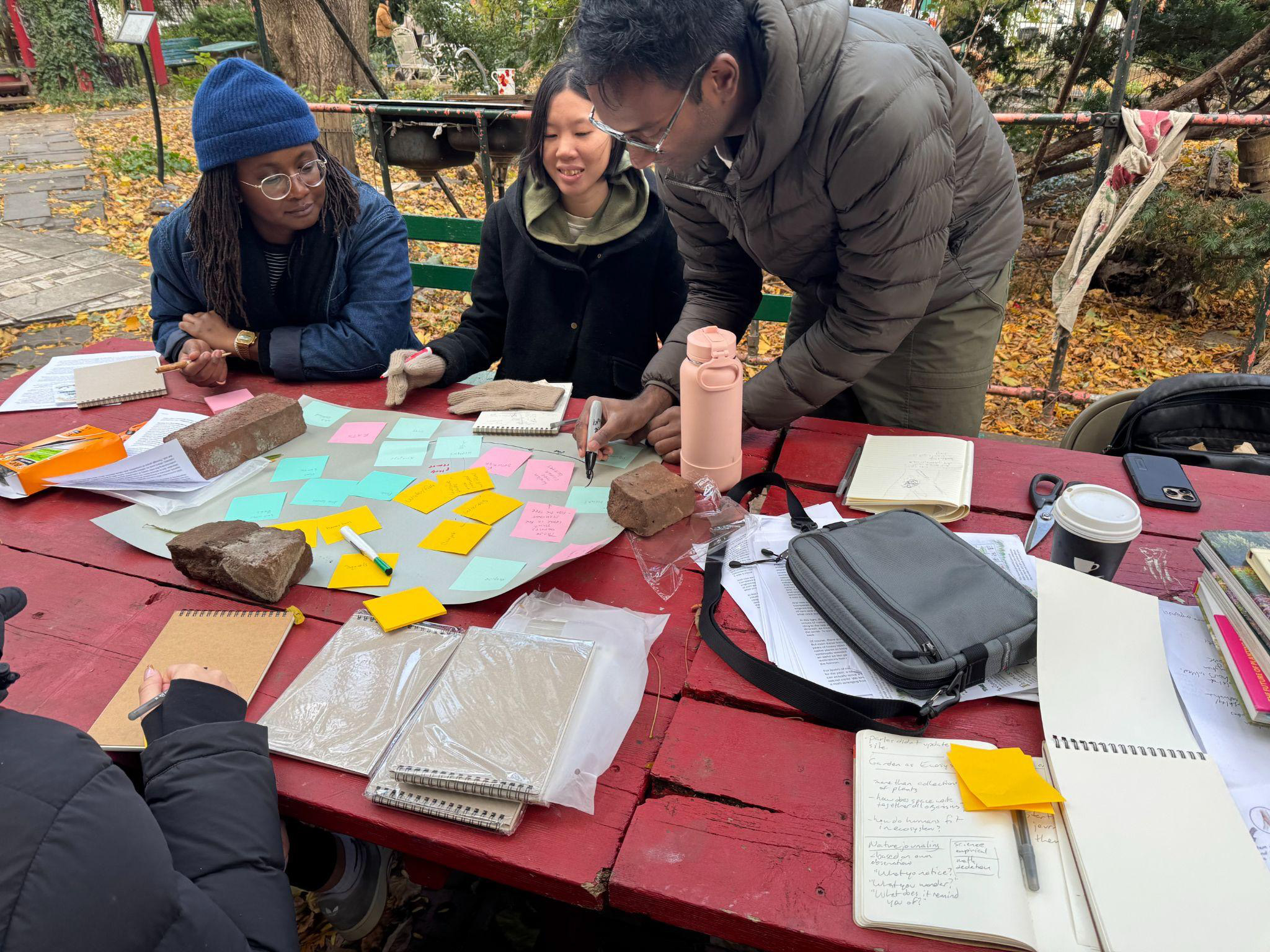
We started by talking to the people actually keeping these gardens alive. Through stakeholder interviews, conversations with garden leaders, and a volunteer survey across 20 gardens, we built a wide view of the experience. Then we went to Green Oasis Community Garden to feel it from the inside.
Back in the studio, we worked through affinity mapping and synthesis to find the thread. What surfaced wasn't a motivation problem. It was a clarity problem rooted in two compounding realities.
Gardens depend on a small core group to carry most of the operational weight. When that group burns out or ages out, the knowledge and culture they've built goes with them. Newer volunteers are left without the context, guidance, or sense of direction needed to step up and carry things forward. And without that foundation, volunteers had good first experiences and still didn't return. The interest was there, but without a clear path forward, there was nothing pulling them back in.
Core group burns out
Knowledge walks out the door
New volunteers don't know where to start
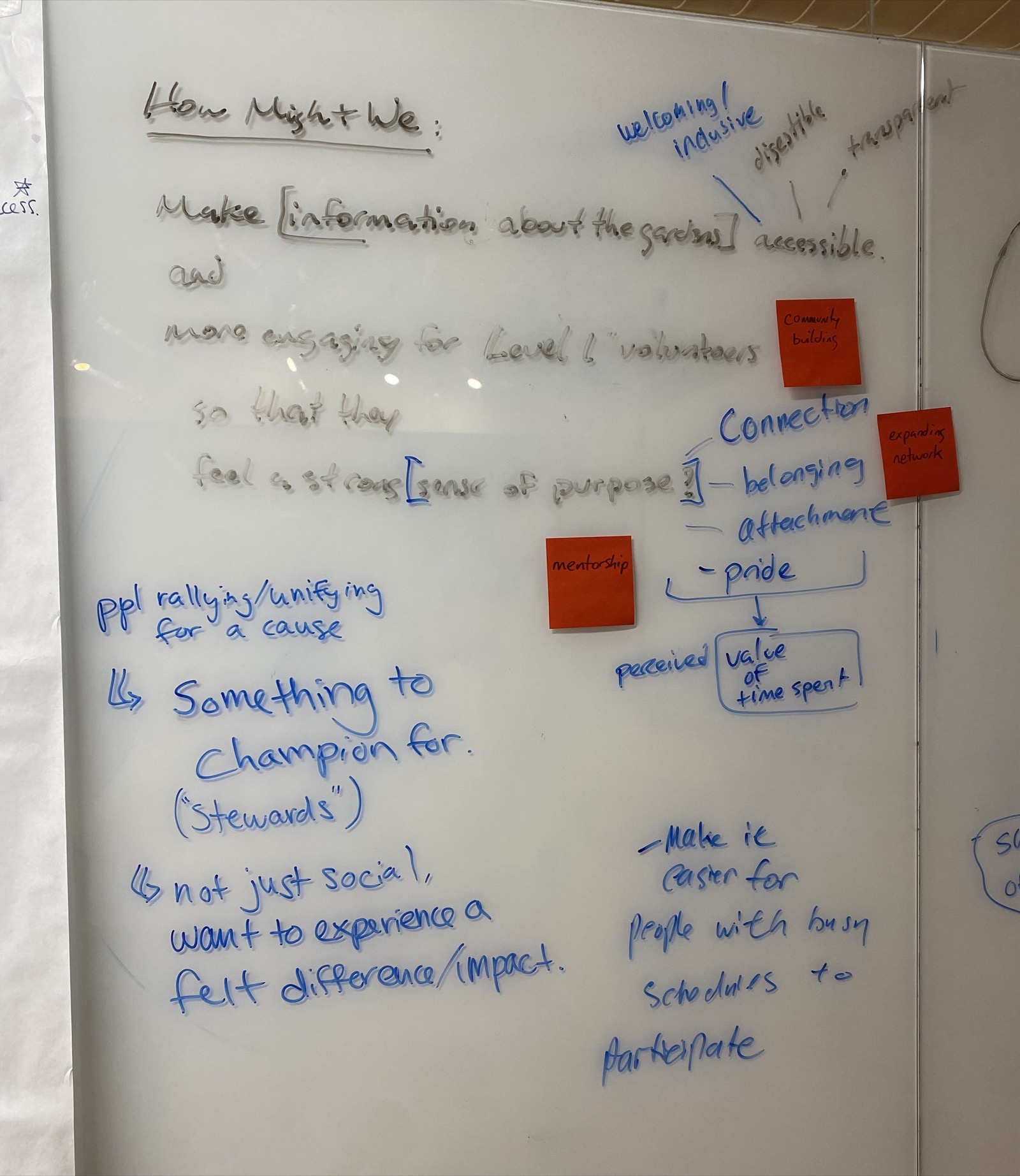
Two insights came out of synthesis that shaped everything after.
Insight 1
Every garden has a story to tell
Most volunteers assume the city created and cared for these spaces. It didn’t. Each garden was claimed and cultivated by the community that needed it, often against considerable resistance. This isn’t conservation. It’s preservation of something that required real effort to exist. When volunteers understand that history, their relationship to the space shifts. They’re not just maintaining a garden. They’re choosing to continue something.
Insight 2
Early Skill Pathways Grow Roots
Returning volunteers are already signaling commitment, but gardens rarely have a structured way to meet them there. Without clear entry points, volunteers struggle to deepen their involvement and rarely grow into the kind of members gardens depend on. What's missing isn't motivation. It's a pathway and the tools to move through it with enough confidence to take initiative when experienced members age out or move on.
Together, they reframed the problem. Volunteers didn't just need a clearer path forward. They needed a reason to care about the place they were stepping into.
Field Visit: Green Oasis Community Garden
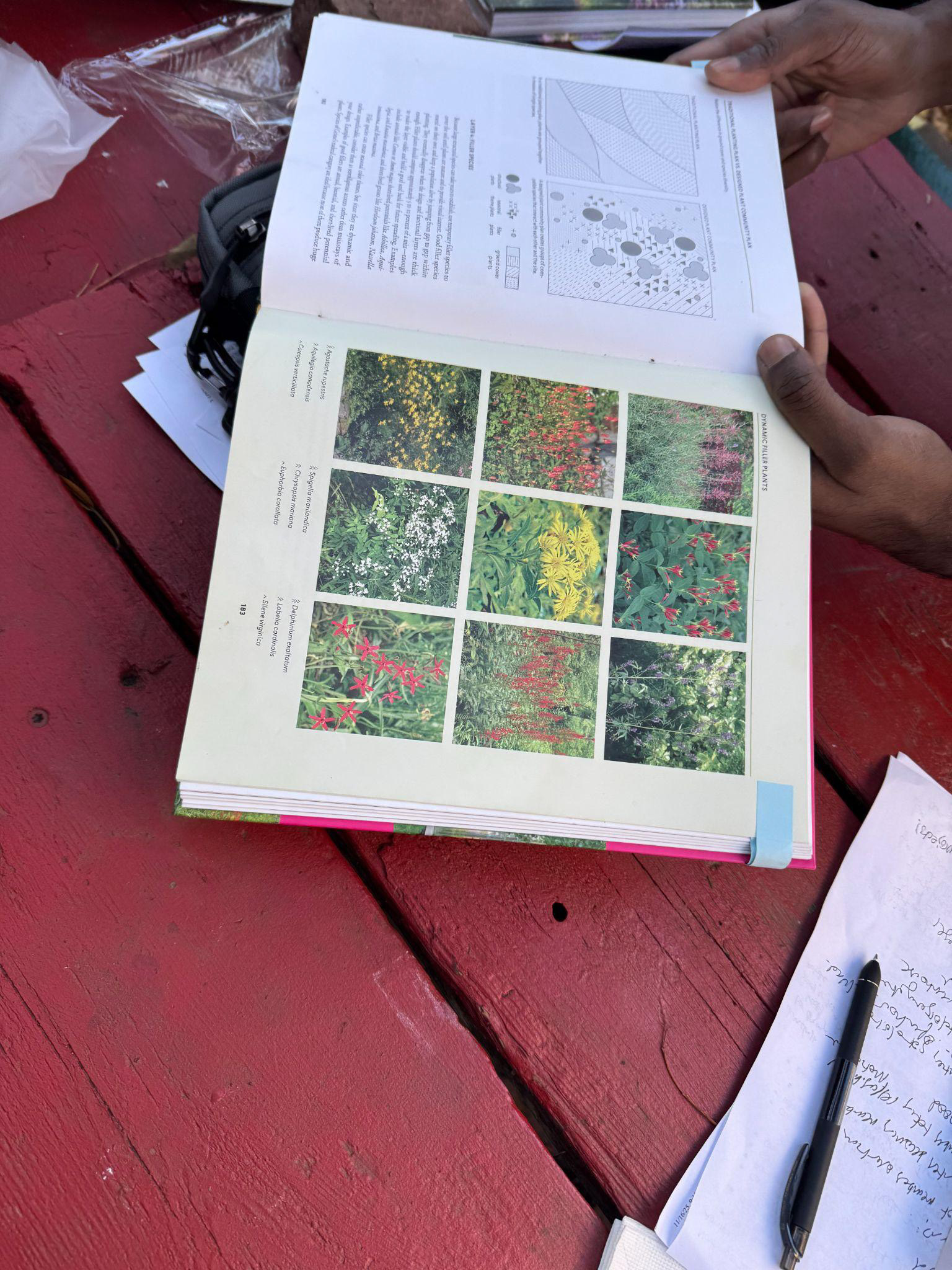
We attended a workshop at Green Oasis as first-time participants: a garden tour, nature journaling, ecosystem mapping, and group reflection. What struck us most was how the day was structured. It had orientation, shared experience, and closure. Touchpoints most volunteer days just don't have.
That structure made room for something real. Hearing the garden's origin story made the space feel worth caring about in a way nothing else in the day did. People opened up, shared stories, and left feeling genuinely connected. It reinforced insight 1: when volunteers understand what they're part of, they invest in its future.
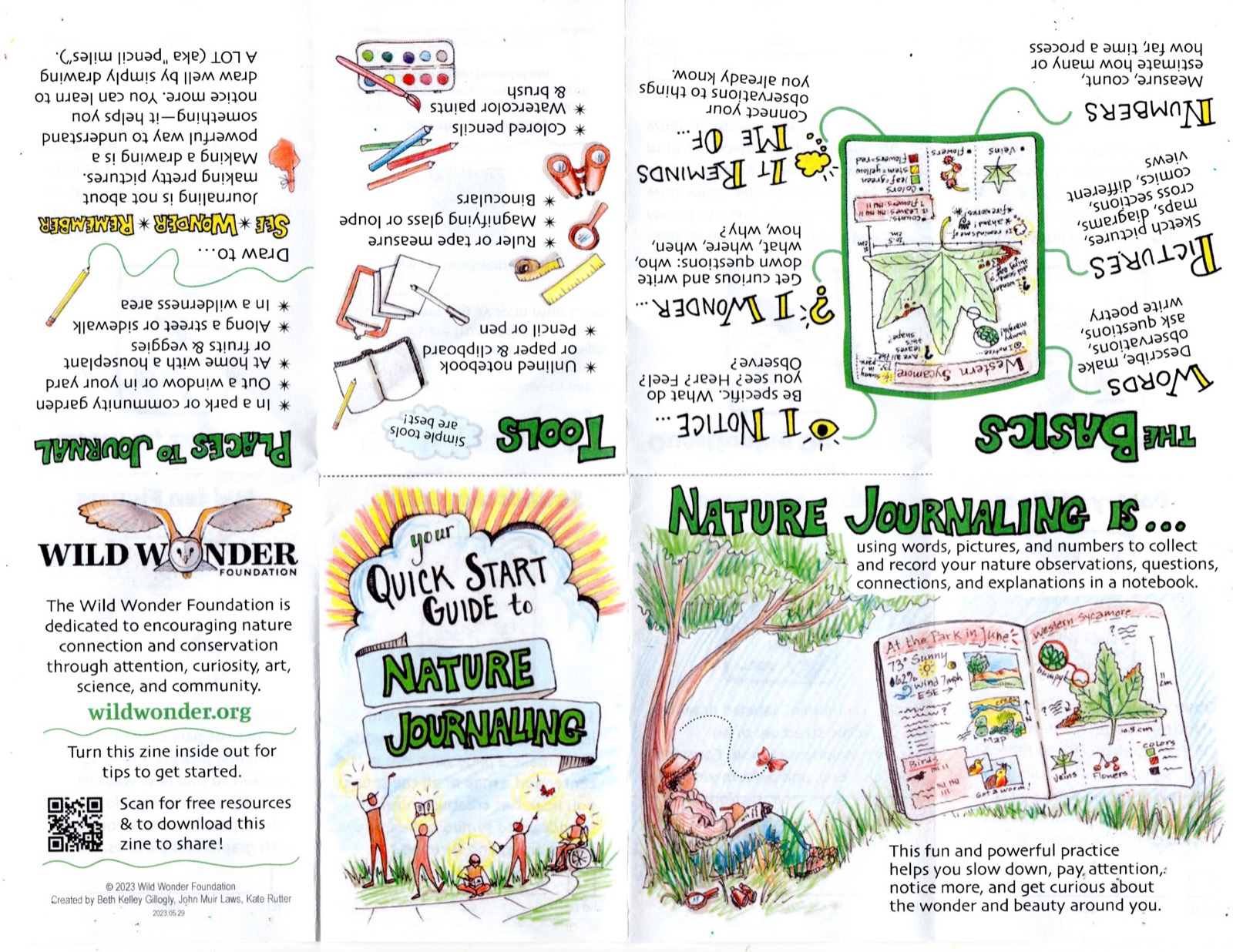
The zine the facilitator handed out reinforced insight 2. Compact, illustrated, and self-directed, it gave participants a way to build knowledge on their own without relying on anyone to guide them. Having something physical to hold, write in, and take home extended the experience beyond the workshop itself. Volunteers could revisit it between sessions, reference it when unsure, and build skills at their own pace without waiting for the right person to be available.
It showed us that a well-designed printed resource could do the work of a facilitator at scale. That became the foundation for the pamphlet.
From Whiteboard to Newsprint
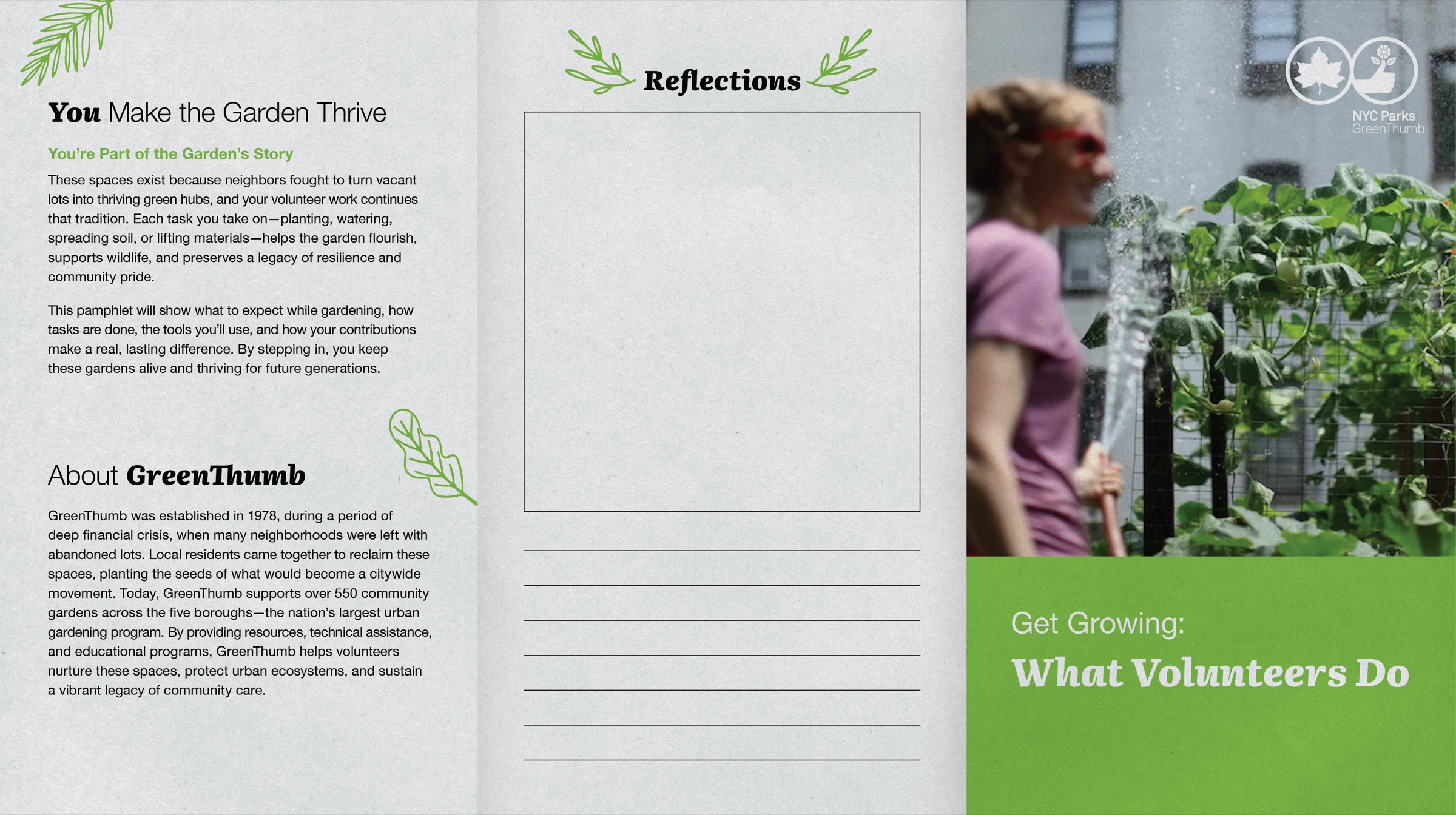
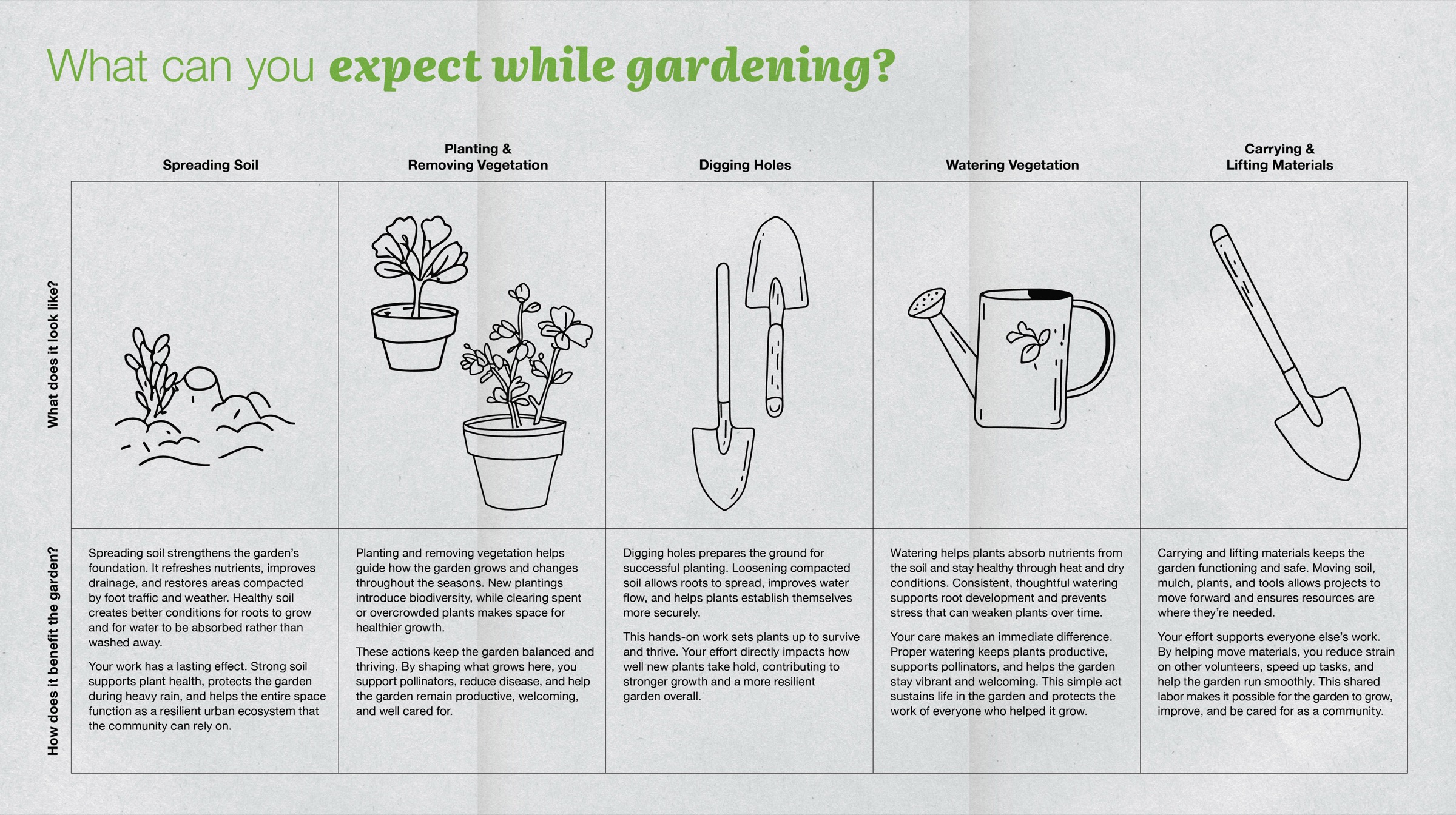
With our insights mapped, I designed a pamphlet that did both things the Green Oasis workshop did well: told a story worth caring about, and gave volunteers something they could use and return to on their own.
The cover opens with "You Make the Garden Thrive," framing new volunteers as part of a living legacy. Inside, it walks through what to expect and how their work connects to the garden's mission. The back half includes space for reflection and skill tracking, because people stay connected to things they've put a little of themselves into.
Hand-drawn illustrations felt right for a project rooted in community care. For production, we chose newsprint: lightweight, affordable, and compostable.
What This Makes Possible
The pamphlet doesn't replace the human experience of volunteering. What it does is reduce how much that experience depends on the right person being available at the right time. As experienced members age out or move on, the knowledge and culture of a garden no longer has to leave with them. Volunteers arrive with context, understand the garden's story, and have something to return to as they grow more involved.
For a network of 550+ independent gardens, that's significant. Any garden can adapt the pamphlet to their own story without losing the core structure, making it one of the few interventions that works with the program's autonomy rather than against it.
Next steps would be testing with real volunteers and garden leaders, and exploring whether it could stretch into something more: a tool for advocacy, helping volunteers become champions for their gardens long after the first workday.
What I Took Away
Getting close changes what you see
The retention problem looked like a motivation problem from the outside. Up close, it was a clarity and story problem. That shift only happened because we got close enough to find it.
The medium is part of the message
The nature journal didn't just inspire the format, it proved it. A well-designed printed resource transfers knowledge in a way that scales without depending on people.
Scalable solutions need to be simple
No budget, no central staff, 550 independent gardens. Those weren't obstacles. They were the parameters that pushed us toward something simple enough to actually work.